Almost every hunter who's spent several seasons in the woods has experienced one of the most painful parts of deer hunting: shooting a deer and, for whatever reason, not being able to find or recover it.
I know I’ve been there, and chances are, you have too. The feeling you get in the pit of your stomach makes you almost not want to hunt again. After all, we owe it to the game to make a quick, clean kill. That’s our job as responsible hunters.
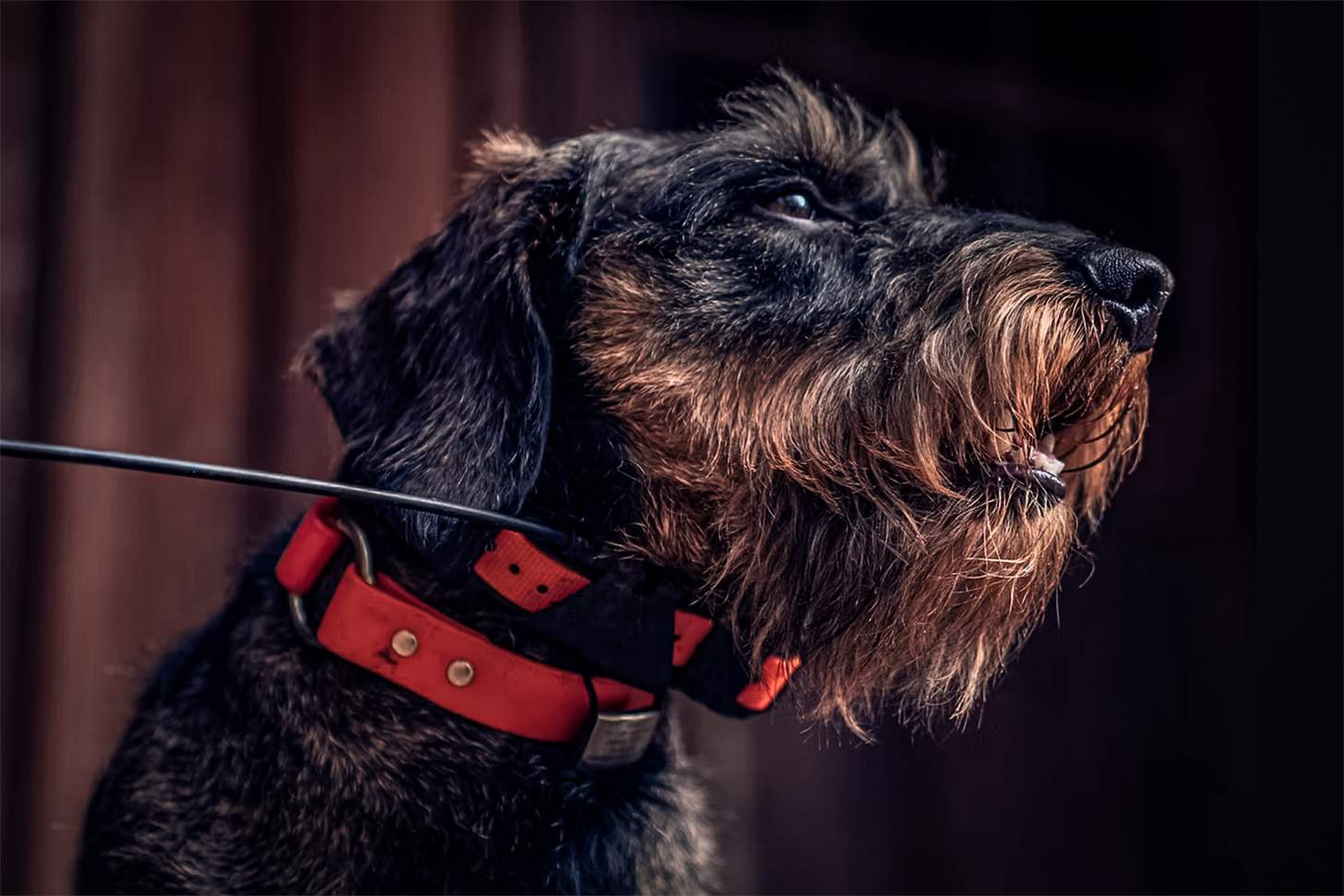
Still, it doesn’t always go the way you’d like. If you’ve lost that once-in-a-lifetime buck to a blood trail that fades out, or there's simply no sign to follow, one of your best options before giving up is turning to man’s best friend. That's why more and more hunters are using dogs to blood trail deer.
Using Tracking Dogs for Deer Hunters
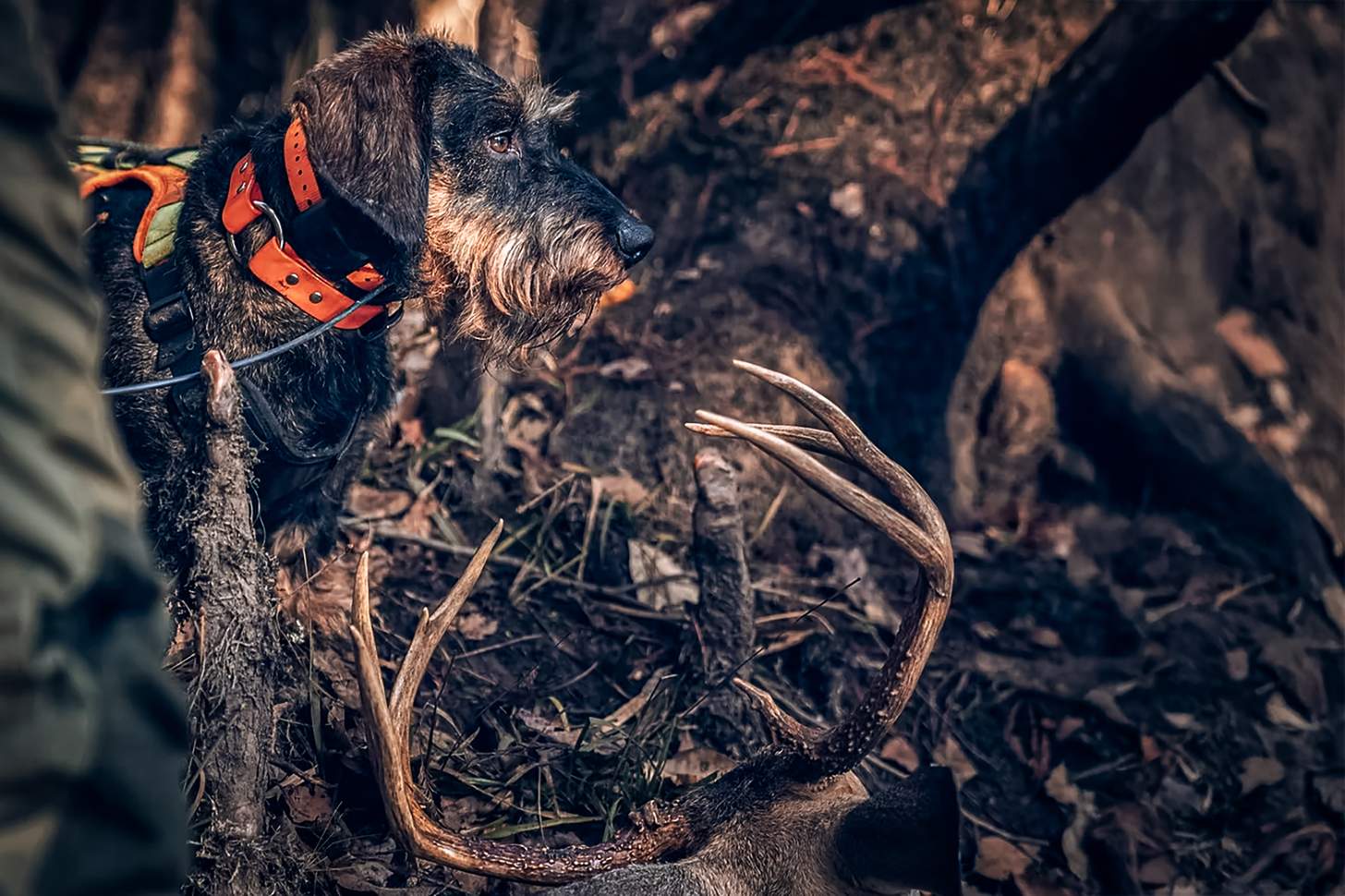
When all your human tracking skills fall short, a good tracking dog might be the answer. While you mainly rely on your eyesight, well-trained dogs use their incredible sense of smell and can find tiny blood flecks that we might miss in their effort to track down wounded deer.
Many of these dogs are bred for this job, and they genuinely enjoy tracking wounded deer just as bird dogs love to point quail or pheasants.
Interestingly, finding a dog tracker to track your deer isn’t as difficult as you might think. In my home state of Oklahoma, the Oklahoma Blood Trackers Association has a Facebook page many use to find a dog tracker in their area, and there are similar FB pages in many states, even states we don't think of as "hunting states," like New Jersey. A quick Google search also provides links to other resources for locating dog trackers nearby.
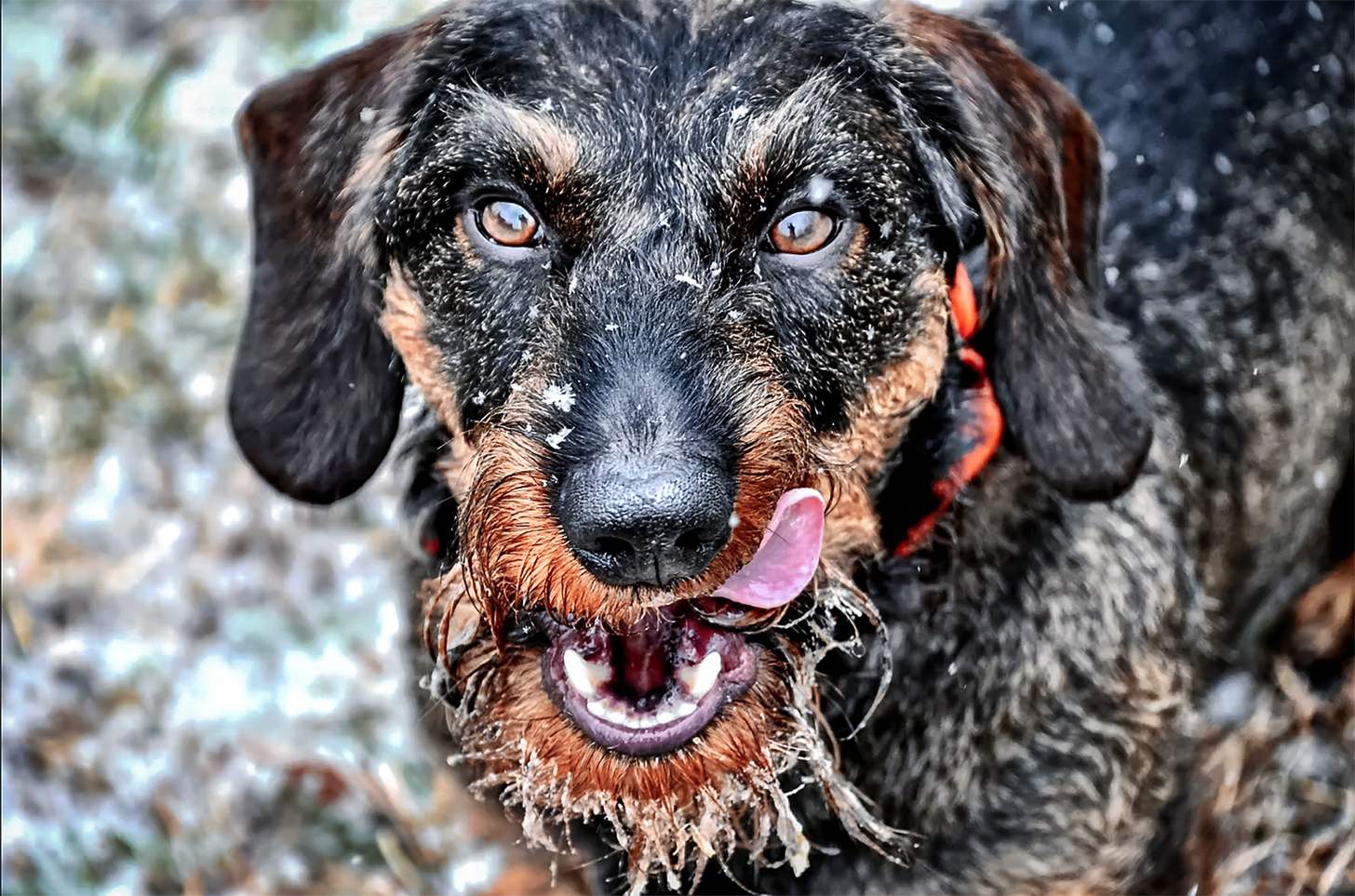
Of course, tracking deer with dogs isn’t legal in every state, and in states where dogs are allowed, there are rules about on-leash or off-leash behavior and other aspects that differ from state to state. Be sure to research your local regs first.
Damon Bungard and Jaeger
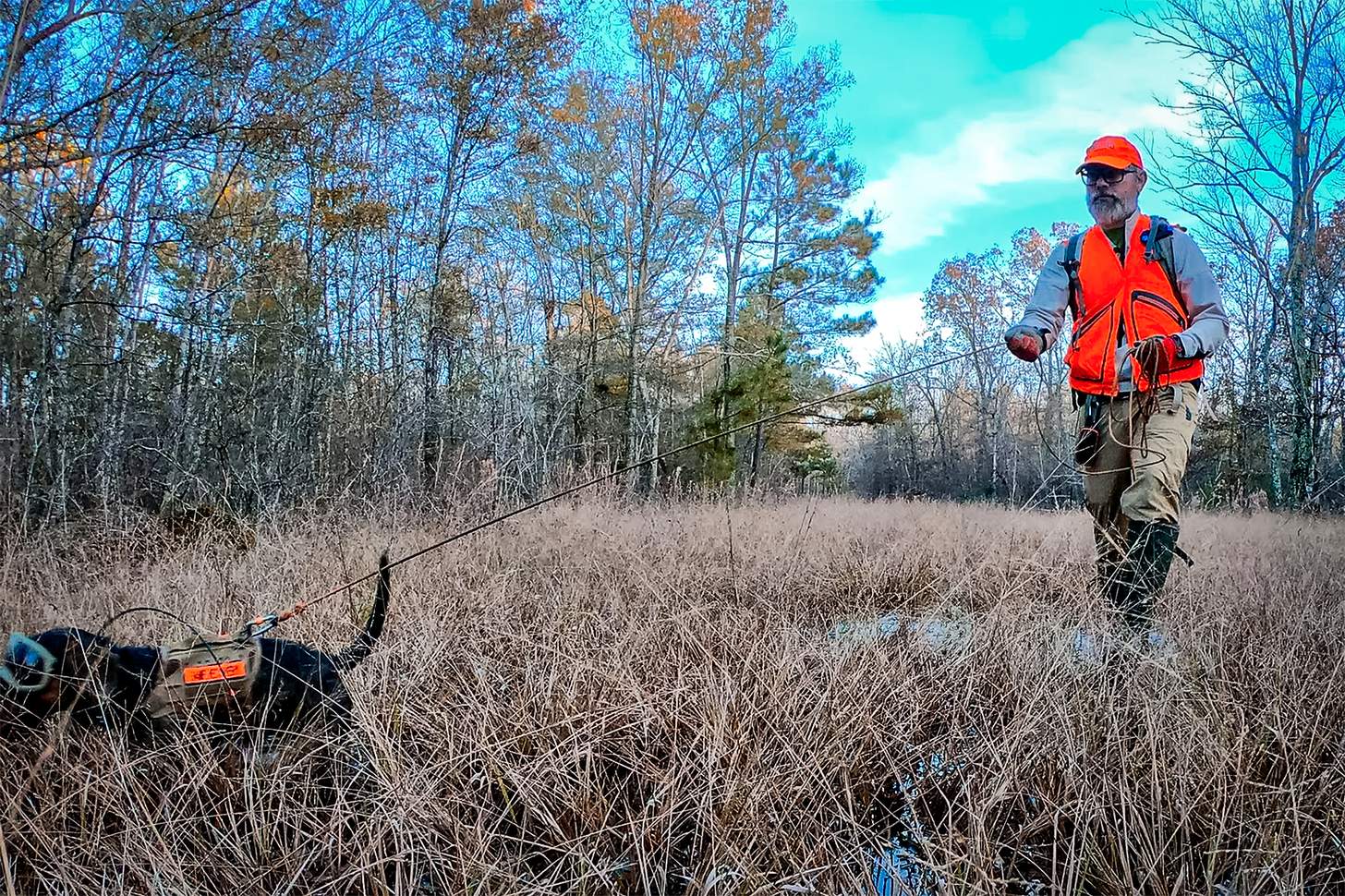
Damon Bungard and his dog, Jaeger make up one of the better-known deer tracking duos in the country, thanks to extensive efforts to promote the effectiveness of dogs for locating game that might otherwise be lost.
Bungard is a professional outdoorsman who wanted a versatile, big game-oriented field dog that would also be a family member and great in the home, as well as fierce in the field.
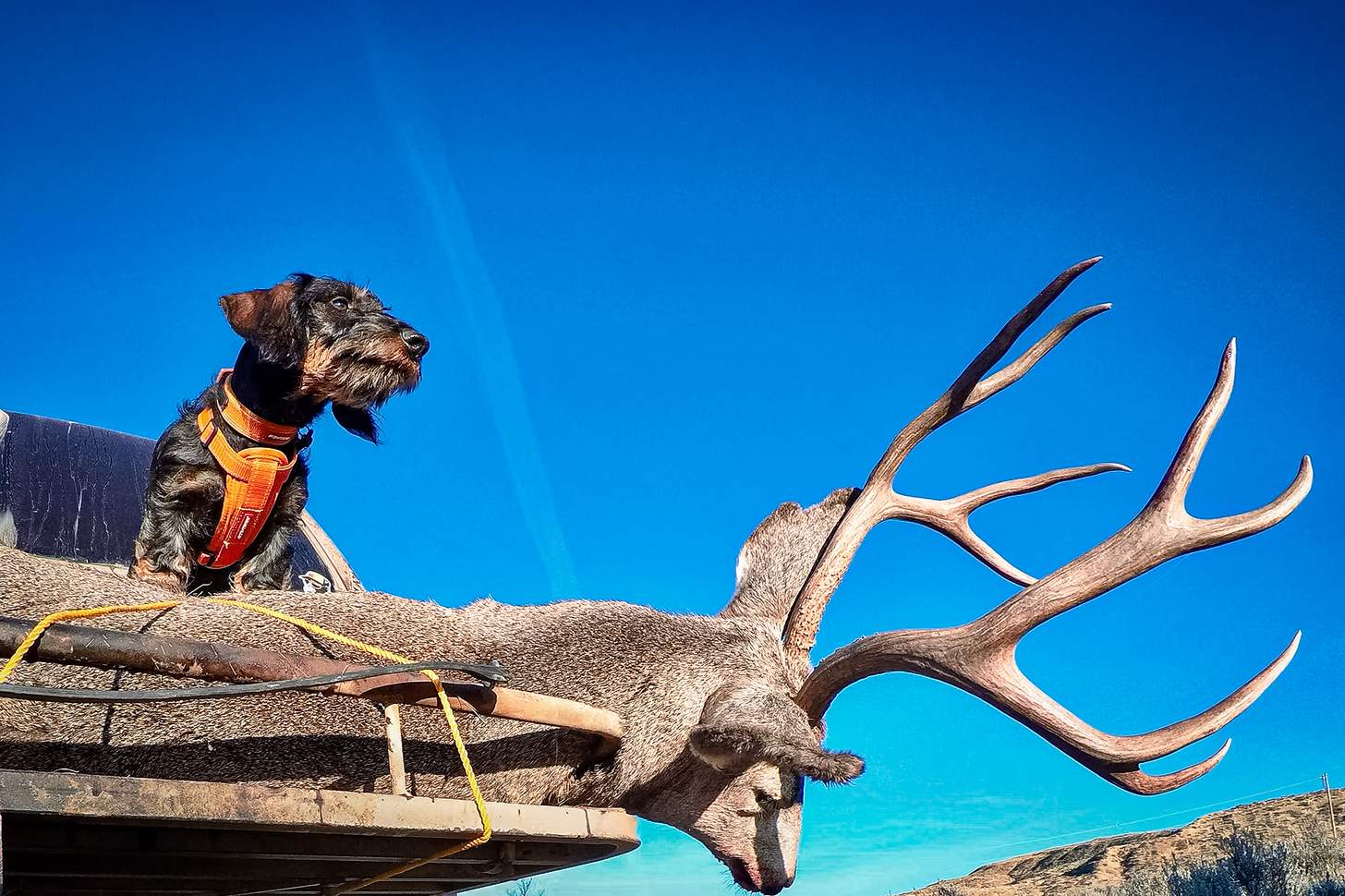
He found exactly that in Jaeger, a teckel. If you haven’t heard of a teckel, don’t feel bad; neither had I before I was introduced to Bungard and Jaeger. In short, a teckel is a wire-haired dachshund bred to meet German working field standards.
He was bred by Mike Schlapa at Vom Mountain Creek and is registered with the DTK (Deutscher Teckelklub) in Germany. In fact, he is one of the few true teckel studs in North America qualified and registered in the DTK breeding program.
Bungard said there’s a lot more to dogs tracking deer than just smelling blood and scent from the gland on deer's foot.
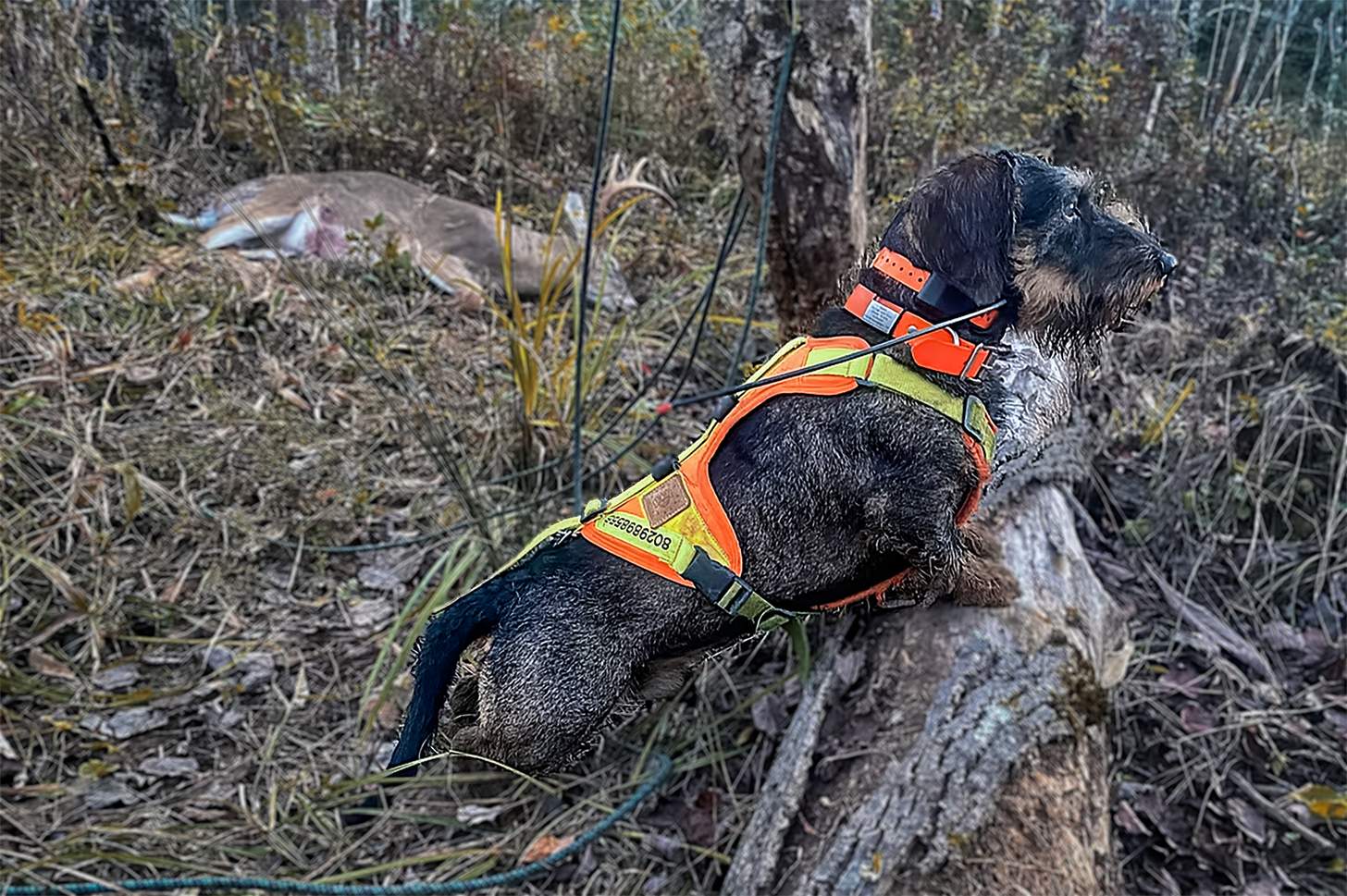
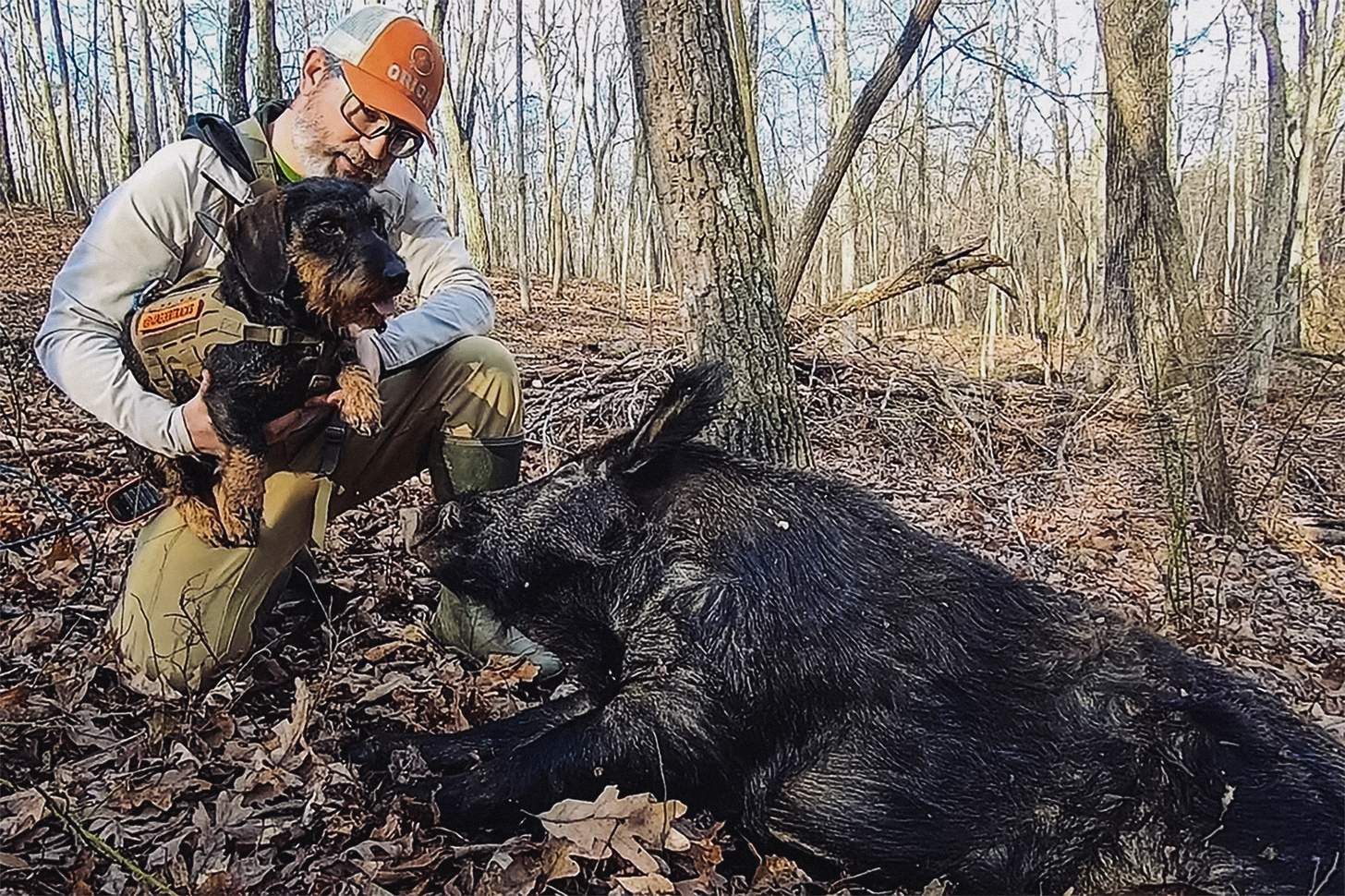
“As far as the scents that they're smelling, people get all worked up over, ‘Oh, they're, smelling the interdigital gland, and that's how they can follow when there's no blood,’” Bungard said. “That's a bunch of hooey. Jaeger has tracked bear, wild boar, and elk. None of them have an interdigital gland, but he’s still hunting that prey.
“Once he knows what we're on and what we're looking for, he's putting it all together. He's smelling everything. He's smelling freshly turned up dirt where they ran. There are so many scents that he's processing that we have no way of knowing.”
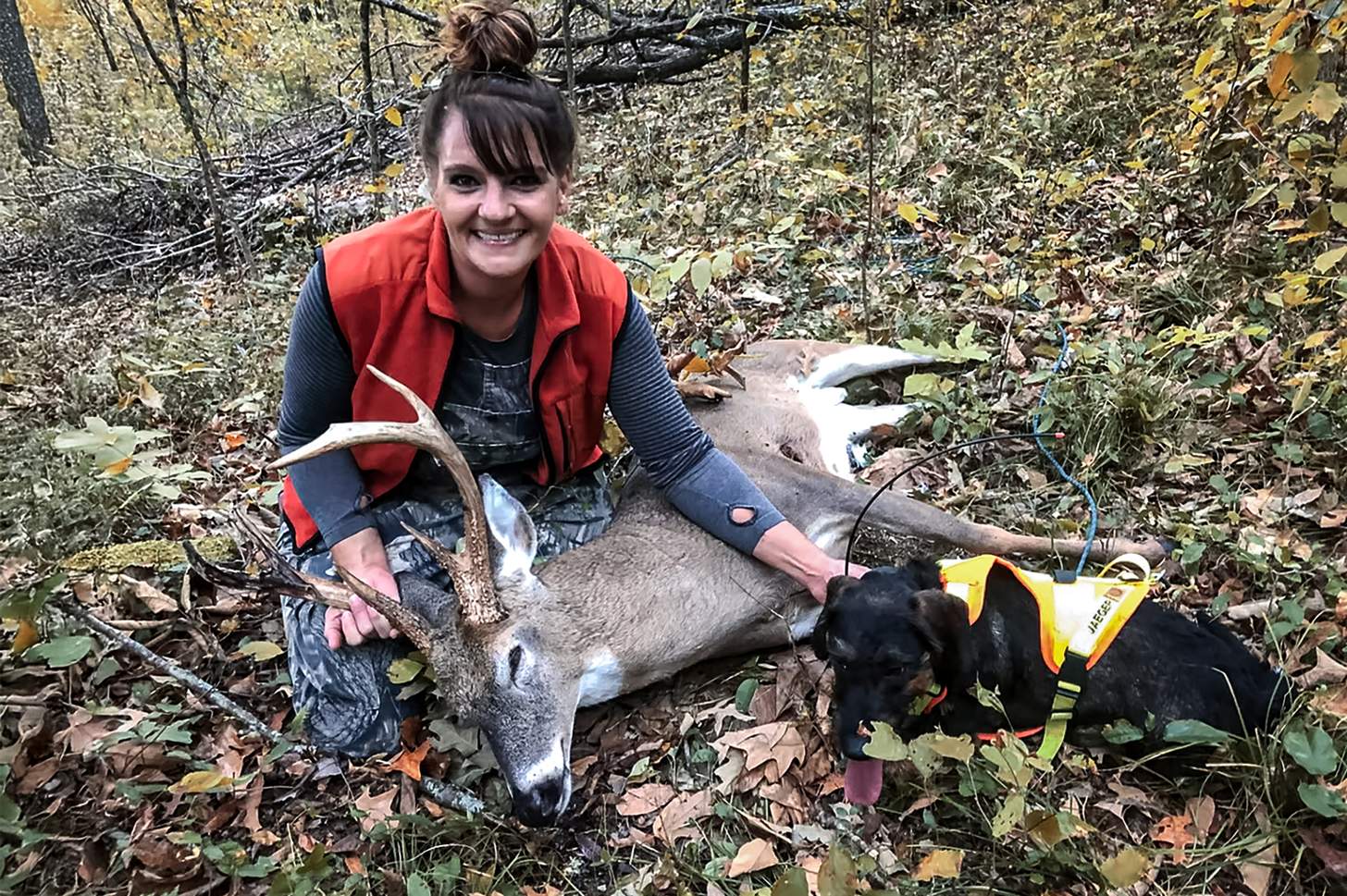
Bungard has a ton of great success stories on his website, as well as videos of several actual tracking episodes with Jaeger. Most end with a happy hunter posing with his buck and his new best four-legged friend.
As you might expect, calls for help from hunters are somewhat higher during archery season than during firearms season, and Bungard can tell when the rut is heating up just by the increased number of calls.
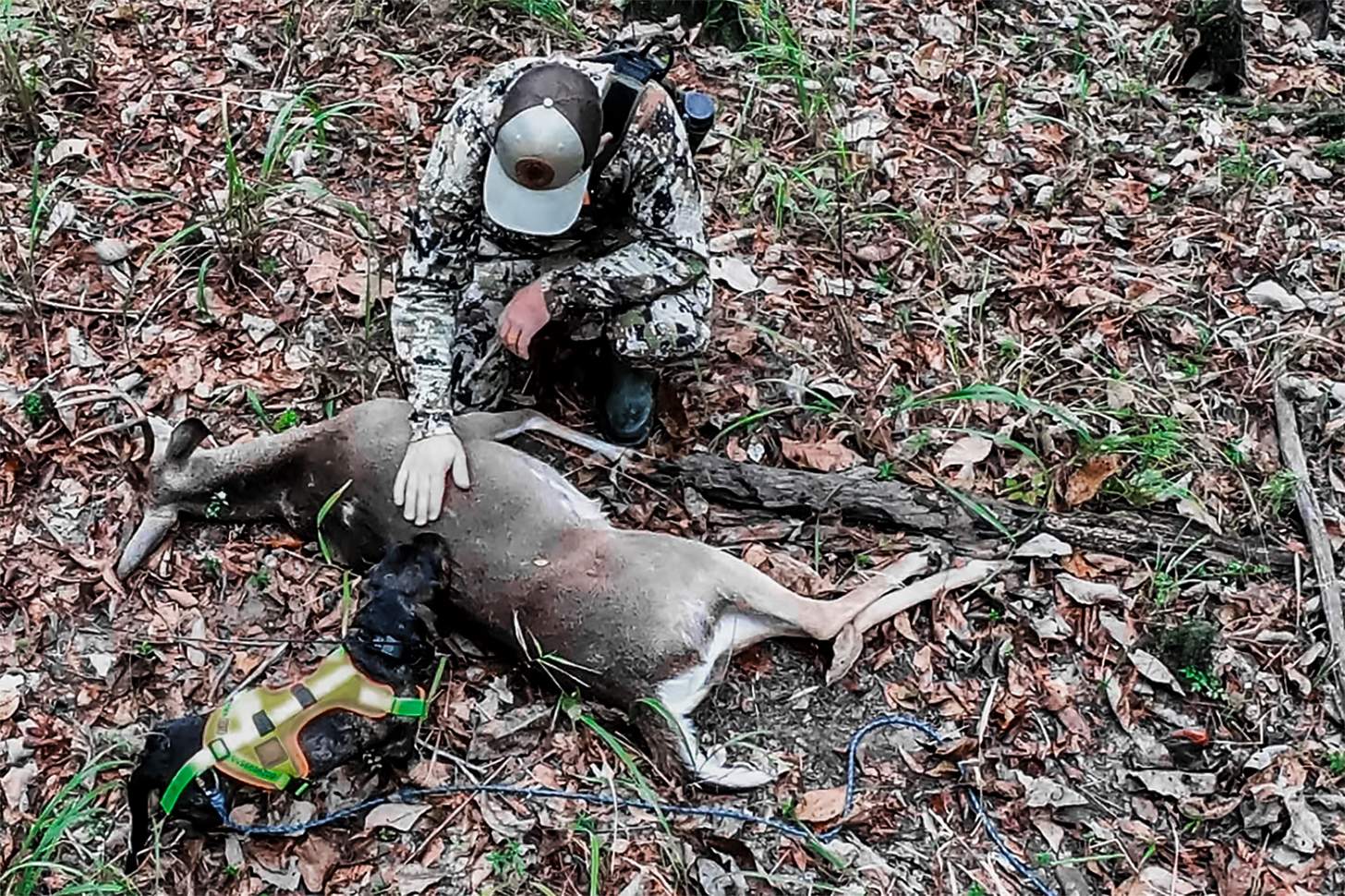
“I'd say the need for tracking goes up (during bow season) because there's a lot more marginal wounds that are lethal, but they simply take more than half an hour or even four hours or six hours to kill the deer,” he said.
“So, you get a lot more scenarios where people track too soon and bump what is a mortally wounded deer — it's just not dead yet. Then oftentimes they'll lose sign, and that's when you really start needing a dog.”
After You Take the Shot
From his many hours tracking shot deer with Jaeger, Bungard has drawn some conclusions about things that commonly confuse hunters after the shot. and come up with a set of steps to follow.
Bungard’s most important advice is for hunters to always wait as long as possible before starting to track a deer. Not doing so has led to many of his and Jaeger’s tracking “opportunities.”
“I tell people all the time, if it's dead in half an hour, it's still going to be dead in two hours or in four hours,” he said. “But if you bump it out of that first bed within the first hour, your odds of recovering go way down, just based on property lines and other complications.
“If you talk to any experienced tracker, they'll tell you the same thing. If left alone, the vast majority of mortally wounded deer will bed and die within 300 yards.”
Bungard also offers some other advice for after the shot, and I found it fascinating because it ran counter to what I have always believed.
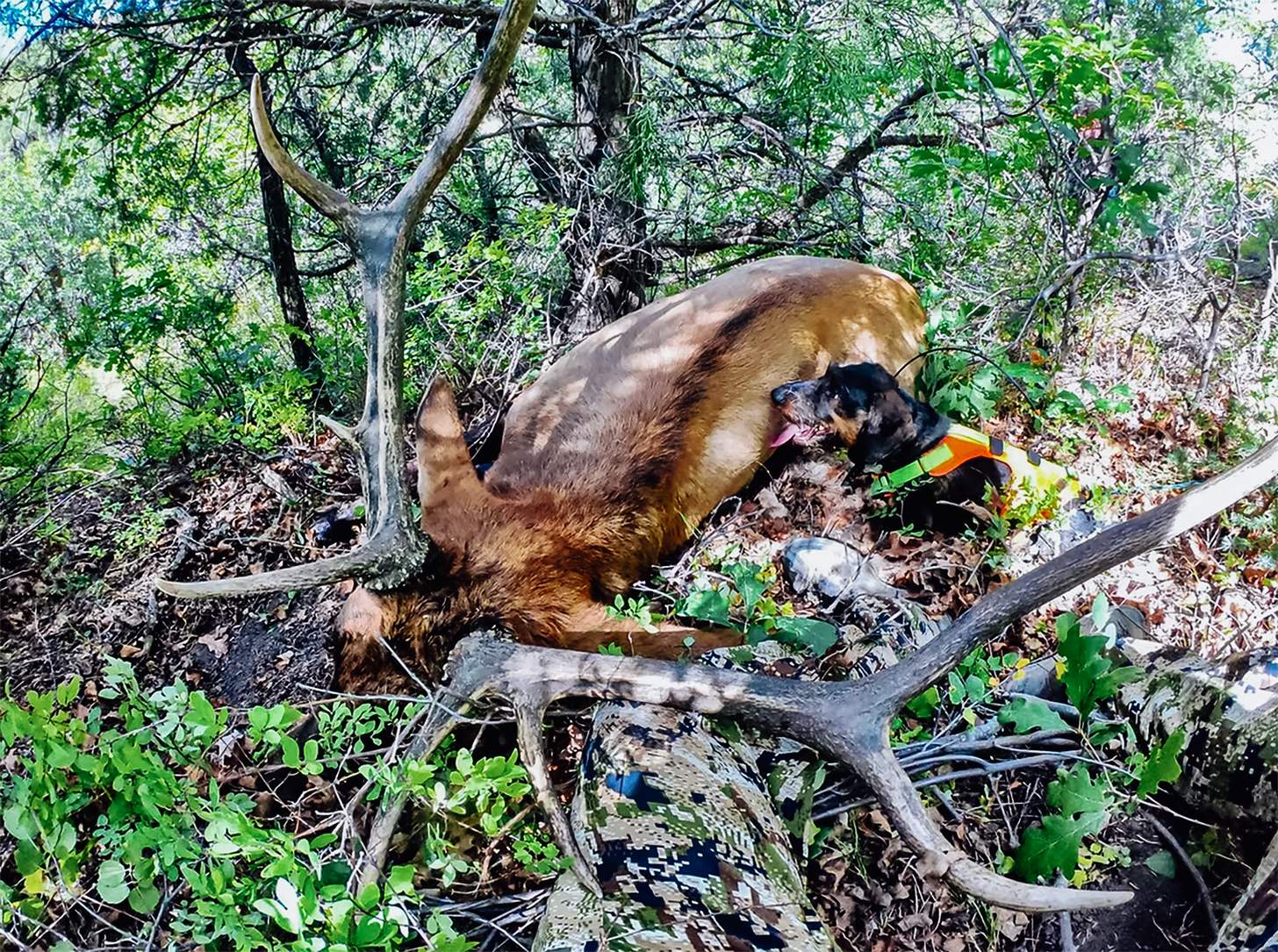
“While waiting as long as you can before you start looking is my best advice, I also think you should pay more attention to what the deer does after it's hit than what your arrow looks like,” he said. “I've kind of learned through tracking to not pay as much mind to how arrows look because they're often deceiving.
“I've seen great-looking arrows that were from what ended up being through a live animal, and I’ve seen terrible-looking arrows that were very lethal.”
Bungard said that’s because of the nature of an arrow passing through a big-game animal.
“They tend to reflect what they pass through last in an animal, not what they pass through first,” he explained. “So, a lot of shots when an animal spins it might hit high lung, cut through the diaphragm and exit the low gut on the opposite side.
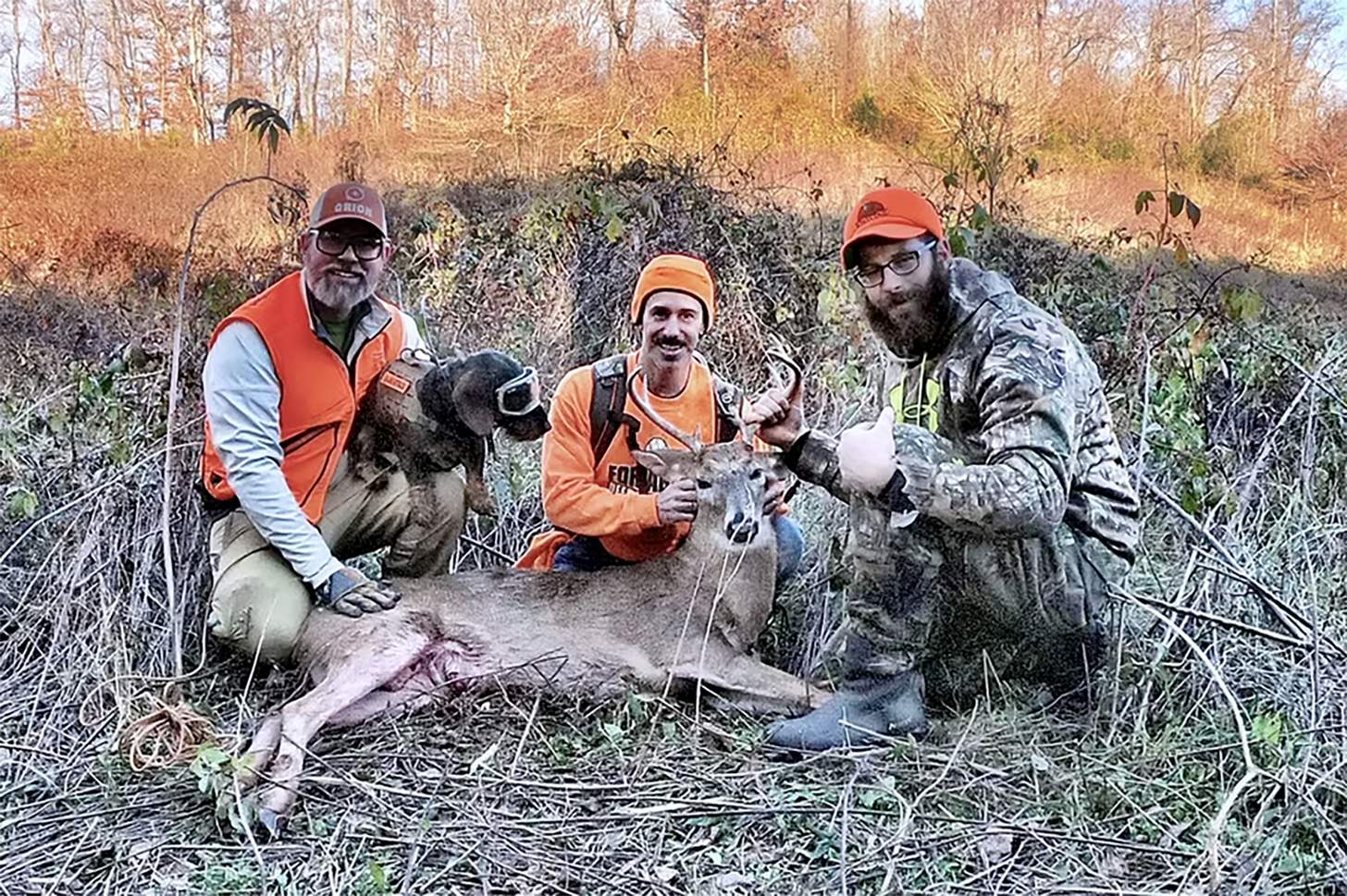
“You may have a lot of white hair at the hit site, and you're probably going to have an arrow that's covered in gut and blood mixed. But that animal's probably going to be dead within a couple of hours and within 300 yards.
“On the other hand, you can have a shot that enters the gut, leaves through a ham and is covered with really good-looking blood. The arrow might make you think it’s a good hit when it really wasn’t.”
Hunters Who Go High Tech
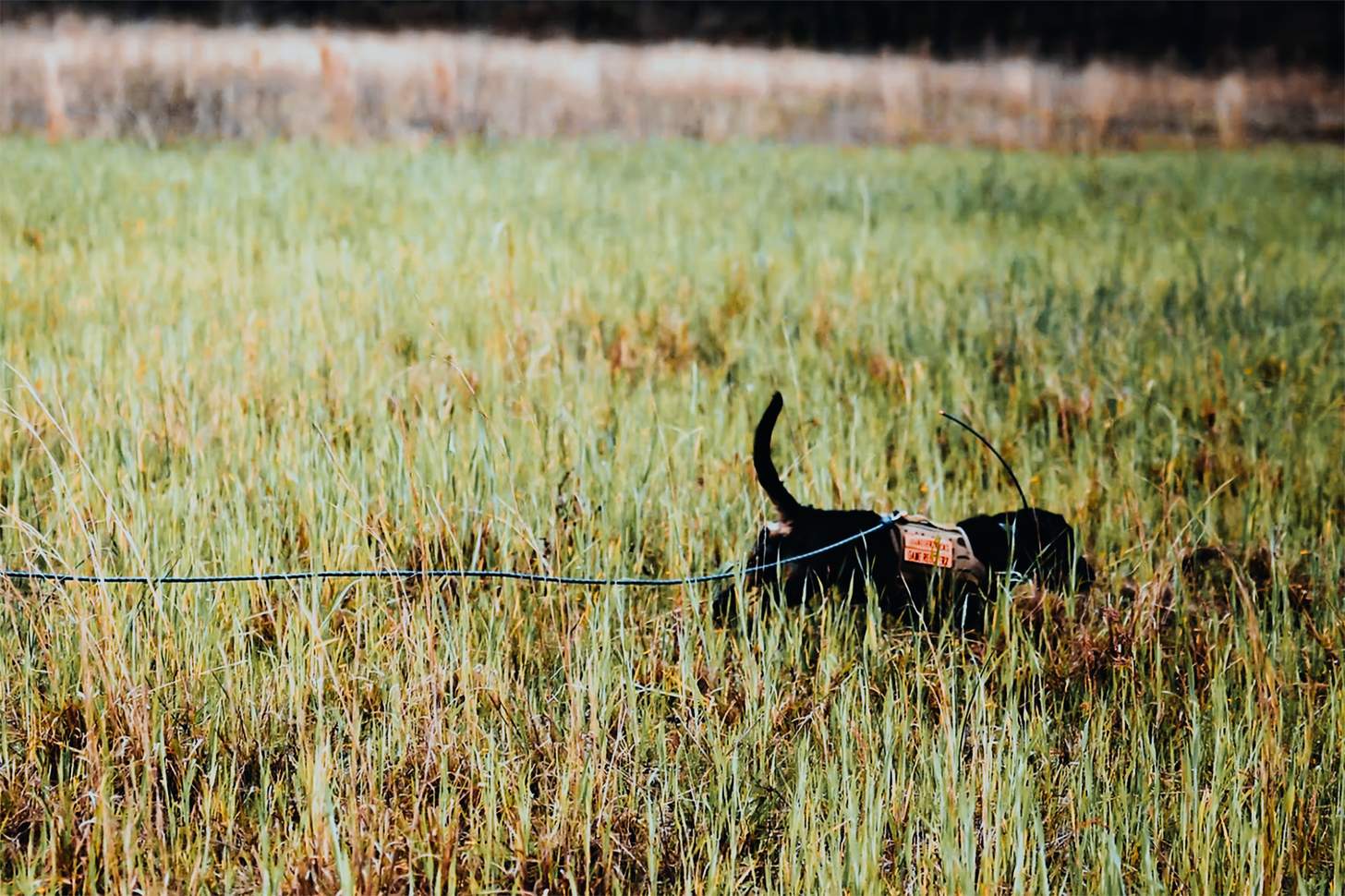
In recent years, drones have been used successfully to locate downed deer. However, equipped with thermal imaging gear, these drones carry a steep price, some of which is passed on to the hunter who hires the drone operator.
“I don’t have any issue with the use of drones, as long as it is legal,” Bungard said. “I considered getting a drone as a backup. Both dogs and drones are valid tools in different scenarios. What I will say is I know of plenty of scenarios where Jaeger has found a deer that a drone would never be able to see on thermal.
“The Achilles heel of a drone is thick cover. When you're hunting a lot of the Midwest and West, you don't deal with a lot of the thick briar canopy and stuff you can get into in the Southeast.”
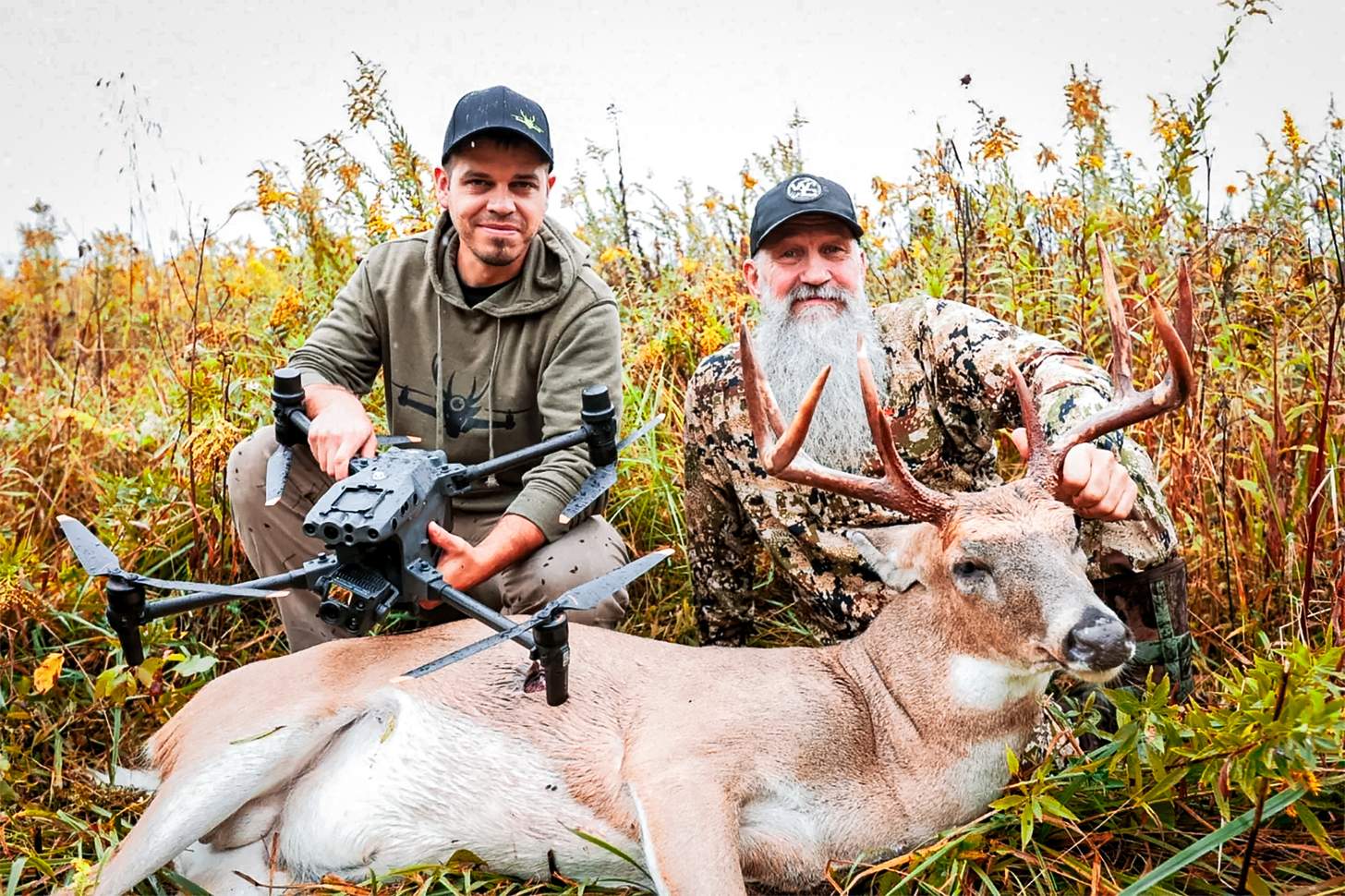
However, Bungard said that drones really excel when you have a cold ground and a warm animal body.
“So, a lot of Midwest scenarios are like that,” he said. “But a lot of the hunting season in the south, it might still be 70 degrees in December, in places like Georgia, so you don't get that thermal gradient that lets the cameras really work at the same level as Jaeger.
“Also, we’ve found deer in water that the drone would never find because they were submerged.”
Small Dog With Big Intensity
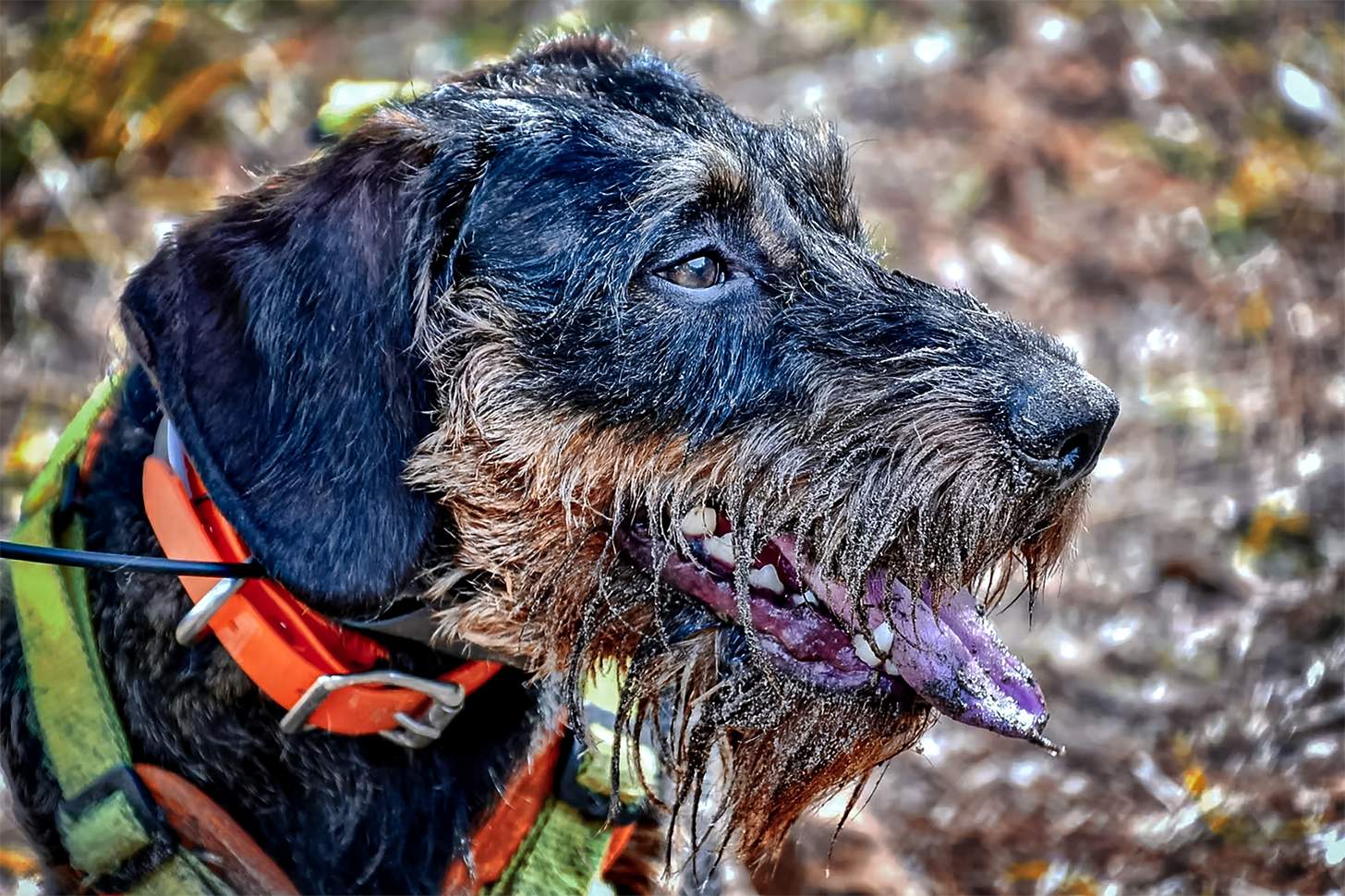
Ultimately, Bungard enjoys tracking with Jaeger and helping people find lost deer they might not have been able to recover otherwise. He also gets a kick out of people’s reactions when they see the small dog.
“I’ll take him out of the truck, and they’ll say, ‘I thought he'd be bigger,’” he said. “Sometimes they get an ‘Is this for real?’ kind of attitude. Then they watch him work, and they'll say, ‘I've never seen anything like that. I've seen some tracking dogs, but Jaeger’s next level.’ He’s just so intense.
“Now, I'll usually send people a video before we arrive on scene so they can watch and know what to expect.”
Blood Trailing Tips for Hunters Without Tracking Dogs
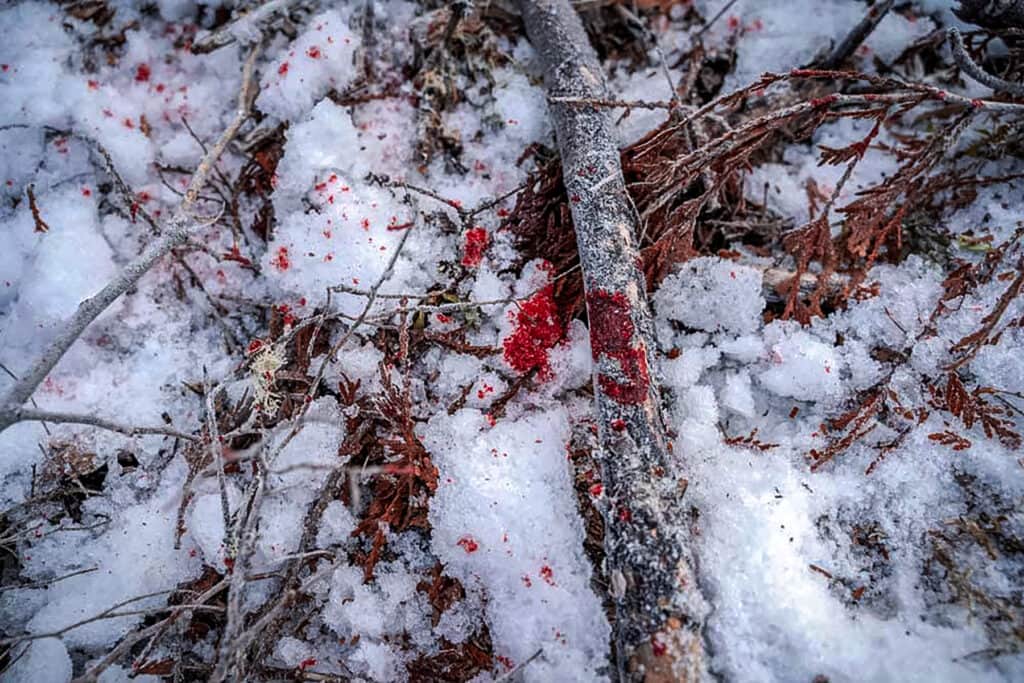
Of course, many deer can be recovered using time-tested methods of observation, attention to detail and patience. Here are a few tips to use the next time you're blood trailing a deer so you don't have to call someone like Bungard and Jaeger.
- Watch the deer closely after the shot to observe its reaction, as it might provide a clue to where it was hit.
- Wait as long as possible before starting to trail, unless you have a very good reason to believe it was a lethal shot that would kill the deer quickly. It’s better to recover it a few hours later than not at all.
- Examine the arrow carefully. While it can be misleading, sometimes it provides a helpful clue.
- Carefully memorize the last place you saw the deer and the direction it was heading. Don’t just think “over that way,” but “about 20 yards east of that big cedar.” Details are important here.
- Always mark your last blood drop of puddle, especially at night. I’ve failed to do this before and spent lots of time trying to locate that last drop. (Pick up your markers after you recover the deer so you don’t litter your hunting area.)
- Look back along your trail occasionally. Your markers will indicate the direction the deer is traveling, making it easier to know where to look for the next blood spot.
- If you lose a blood trail, go back to the last blood sign and start walking circles outward from that point. This often helps you find the trail again if a deer has changed direction.
- If you completely lose the trail and feel ready to give up, seek some help. Fresh eyes often spot things you might have overlooked, especially after a long tracking session. If that doesn’t work, call a tracking dog expert (if legal in your state) to see if they can assist.